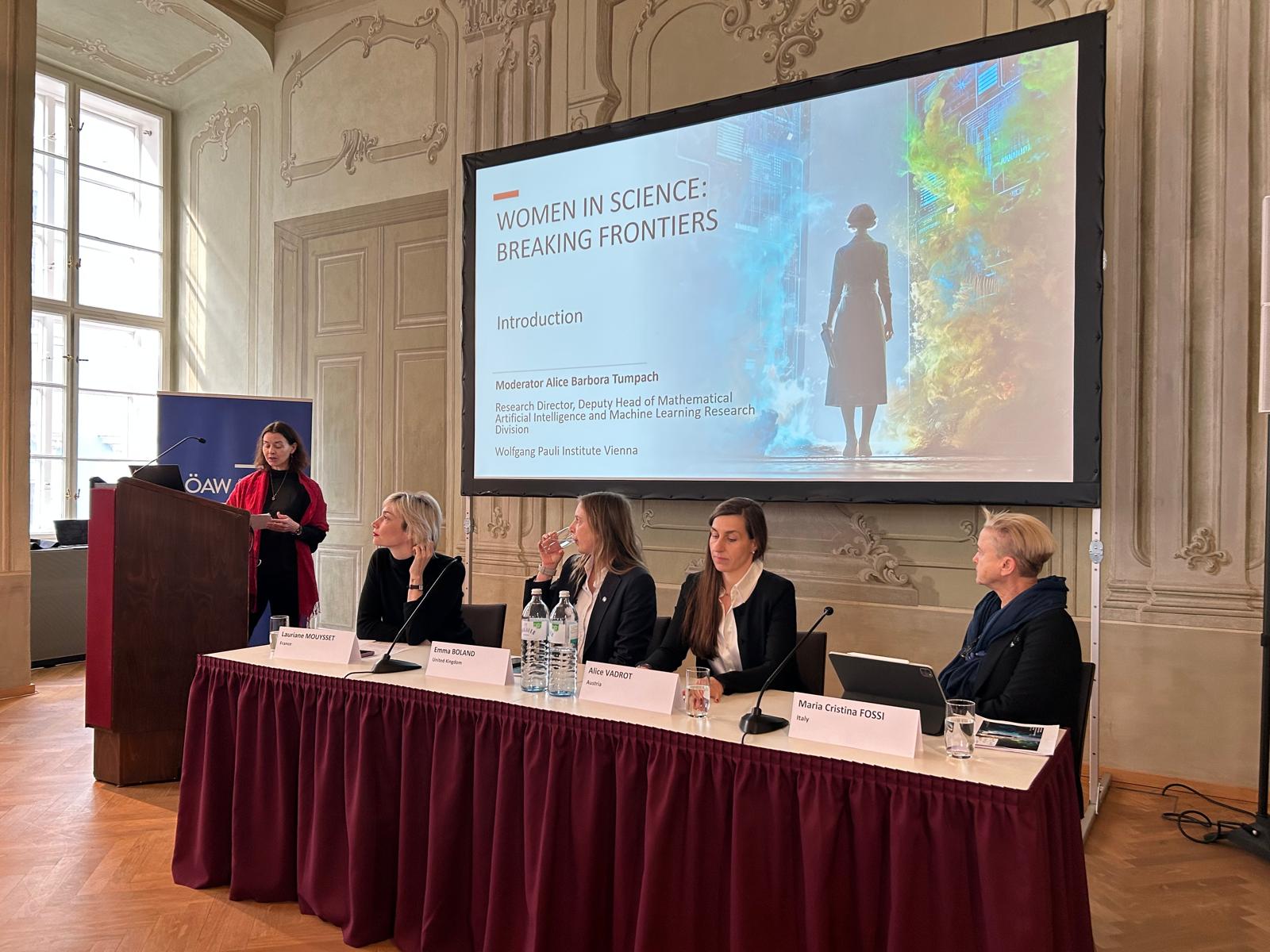

Research on Mediterranean biodiversity took centre stage at a major international science event in Vienna this week. At the Austrian Academy of Sciences, leading researchers gathered for Women in Science: Breaking Frontiers, highlighting pioneering work led by women in STEM. Among them, Prof. Cristina Fossi presented ongoing research on the impact of human-driven pressures on Mediterranean ecosystems, with a particular focus on two new European projects: MIRAMAR and MedPROACT. Her participation also reinforced the international dimension of the Plastic Busters initiative, which promotes scientific cooperation to better understand and protect Mediterranean marine life.
SCIENCE TACKLING MARINE PRESSURES
Mediterranean biodiversity was at the centre of the international event Women in Science: Breaking Frontiers, held on 3 March at the Austrian Academy of Sciences in Vienna. The meeting brought together nine leading scientists from different STEM fields to discuss how research can address today’s environmental challenges.
Among the invited speakers was Prof. Cristina Fossi from the University of Siena (UNISI). She represented Italy on behalf of the Ministry of Foreign Affairs through the Italian Embassy in Vienna.
During her talk, Fossi presented her research on the impact of human pressures on Mediterranean biodiversity. In particular, she focused on marine pollution and plastic contamination, two growing threats to marine ecosystems.
However, her presentation also highlighted the role of science in developing solutions. According to Fossi, strong international cooperation is essential to better understand environmental pressures and design effective responses.
For this reason, she introduced two recently launched European initiatives: MIRAMAR and MedPROACT. Both projects aim to improve monitoring and protection of Mediterranean marine ecosystems. In addition, they strengthen collaboration between research institutions across the region.
These initiatives operate within the broader framework of the Plastic Busters programme. The initiative is labelled by the Union for the Mediterranean (UfM) and focuses on tackling marine litter and its ecological impacts.
At the same time, the projects seek to improve scientific knowledge about cumulative environmental impacts in Mediterranean waters. Researchers will analyse data, develop monitoring tools and support strategies for mitigation and ecosystem restoration.
Events such as Women in Science: Breaking Frontiers also play an important role in connecting researchers from different countries. Moreover, they create opportunities to share knowledge and promote collaboration.
Ultimately, scientific cooperation remains key to protecting Mediterranean biodiversity and ensuring the long-term health of marine ecosystems.
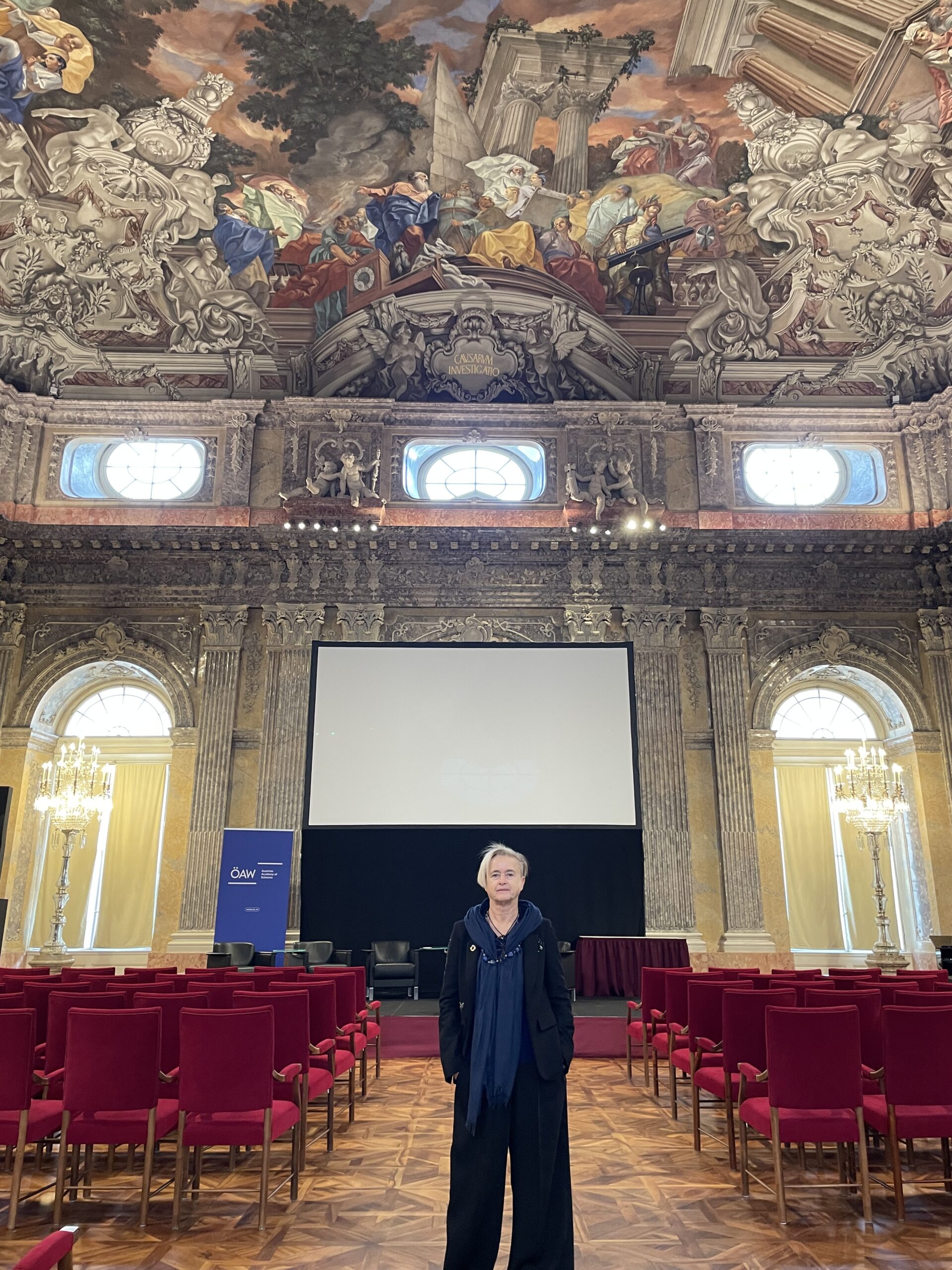
“Understanding the pressures affecting Mediterranean biodiversity is essential to protect our marine ecosystems. Through projects such as MIRAMAR and MedPROACT, we are strengthening scientific cooperation and generating the knowledge needed to guide effective conservation and restoration actions.”